The Society(Regd. 246/81) was Established in 1981.The Society Owns: AKP & PK Junior College, Chirala.An institute in the service of Society for more than 40 Years
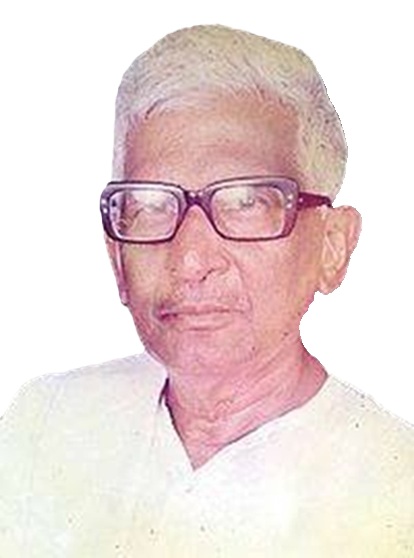
Late Shri Pragada Kotaiah (26 July 1915 – 26 November 1995) was born to
Late Shri Pragada Veerabhadrudu, Late Smt. Kotamma in Nidubrolu, Andhra Pradesh, India.
He was an Indian Freedom Fighter, Parliamentarian and Legislator . He was the leader of the Handloom movement in India.
Shri Pragada Kotaiah dedicated his life to the welfare of marginalized communities, particularly renowned for his exceptional contributions to the handloom weavers.
With his visionary leadership, Shri Pragada Kotaiah seamlessly integrated upstream and downstream systems to provide holistic support to handloom weavers. His efforts encompassed every aspect of their lives, from housing needs to marketing support for their products.
The establishment of housing colonies provided weavers with dedicated spaces where entire families could undertake various ancillary activities related to weaving. Co-operative Societies were set up to supply yarn and to market the finished products, while co-operative cotton spinning mills ensured a steady supply of cotton yarn to their societies. Additionally, weaving centres and design centres were introduced to empower weavers to create garments aligned with contemporary designs. Marketing cooperatives facilitated the global reach of handloom products, significantly enhancing the lives of the weavers.
In essence, Shri Pragada Kotaiah became synonymous with the handloom weavers, leaving an indelible legacy of empowerment and progress.
SERVICE TO THE SOCIETY
Member of Parliament
Member of Parliament, Rajya Sabha from 1990-1995
Legislator
Shri Kotaiah was Member of the Legislative Assembly from 1952 to 1962 in the composite Madras State, Andhra State and in Andhra Pradesh. Again elected as member of Andhra Pradesh Assembly from 1967 to 1972, he served as member of the Andhra Pradesh Legislative Council from 1974 to 1980. He served on several legislative subcommittees and was Member on the A.P. State Drainage Board and District Irrigation Committee.
Indian National Congress
Shri Kotaiah was member of the Andhra Pradesh Congress Committee from 1948 to 1974, member of its working committee from 1955 to 1956 and its general secretary from 1974 to 1978.
Handloom Weavers
Shri Kotaiah was General Secretary of the State Hand-loom weavers congress, Madras and Andhra, since 1942. Also general Secretary of the All India Hand-Loom Weavers Congress, founded in Nagpur in the Year 1945 with the blessings of Mahatma Gandhi.
Handloom Industry Protection
Shri Kotaiah led Satyagraha Movements first for 75 days in Madras and again for 20 days in Andhra area, courted arrests and sentenced by courts.
Land Distribution to Poor
Shri Kotaiah founded the Romperu Development Committee; got distributed about 16,000 acres of land of Romperu drain to poor in 1954. That was the starting point and set up example for the distribution of Government lands in the state.
Irrigation
Shri Kotaiah was responsible for provision of irrigation facilities in Romperu lands in Chirala and for starting of Thotavaripalem Lift Irrigation Schema and helped economic uplift of thousands of poor peasants in several villages on the eastern side of Kunderu drain in Chirala Taluq.
Development of Drainage Facilities
He fought for provision of drainage facilities to the lands irrigated in Krishna Western Delta in 1964, when irrigated lands in Chirala and Bapatla areas were inundated in the Floods. With the result Mitra Committee was constituted. The report was kept in cold storage; Again unprecedented floods occurred in May 1969 in Chirala Area, washing away into the sea more than 2,000 people working in the fields. When Dr. K. L. Rao the then Union Irrigation Minister visited Chirala at that time, Shri Kotaiah pleaded for implementation of the recommendations of the Mitra Committee and also got announced on the spot, a loan of Rs. 30 million by the Centre to the State Government to take up the Drainage Facilities. The Andhra Pradesh State Drainage Cess Act was enacted; Andhra Pradesh State Drainage Board was formed; took up the schemes for improvement of Drainage Facilities in both Krishna and Godavari Deltas.
Governing Body Members
Governing Body Members dedicated to the welfare of poor students taking the ideals of the founding President and Members of the Society
The founding members worked in a magnanimous, noble and incorruptible way for the development of the College with their Founding President
Sri Pragada Kotaiah, President
Sri Palepu Ranganadham, Vice-President
Sri Uppala Venkateswarlu,Vice-President
Sri Nerella Narsimham,Vice-President
Dr. Akurati Suvrata Chandra, Secretary & Correspondent
Sri Ande Narasimha Rao,Joint Secretary
Sri Perli Israel,Joint Secretary
Sri Kandula Yellamanda Rao,Joint Secretary
Sri Thirumalasetty Krishna Murthy, Treasurer
Sri Tulabandula Venkatappaiah,Member
Dr. Dasari Balasankara Rao, Member
Sri Sowdagar Usman Alibeig,Member
Sri Adusumalli Venkata Subbaiah, Member
Sri Karyampudi Venkateswarlu,Member
Sri Tiruveedula Bala Nagendra Ravi Kumar, Member
Sri Avvaru Subrahmanyam, Member
Sri Budaraju Seshagiri Rao, Member
Sri Indeti Rama Murthy,Member
SPACIOUS BUILDINGS & PLAYGROUNDS
LEARN AND EARN SCHOLARSHIPS
Dear Parents,
Andhra Kesari Prakasam Educational Society, Chirala is happy to announce LEARN AND EARN SCHOLARSHIPS for 11th and 12th Class Students
Many a times you find your children are very good in the studies. But you are not able to afford studies or fees for additional coaching and costs of additional books etc. Intermediate is very crucial in the life of students. Andhra Kesari Prakasm Educational Society, Chirala gives you an opportunity so that your son/daughter can earn for your family while studying during these one/two years.
Following is the procedure to avail the Scholarship for the Parents:
Step-1:Register your Applicant with the Society as per the given contact details
Step-2:After checking the credentials, your Application would be either accepted or rejected. Decision of the Governing Body is final and no claims for rejection are accepted.
Step-4:Student Performance in Excel mode would be monitored every month. No scholarship would be granted if the student performance is not competitive.
Step-5:Based on the Performance , Applicant would be awarded a scholarship upto Rs 1,000 per Month. Decision of the Governing Body/Academic Council regarding this is final and no claims for Scholarship would be entertained
Step-6:Depending upon the requirement we may facilitate special on-line/off-line training classes
You can also contact any of the Governing Body Members of the Society
In case we detect any misrepresentation of facts or fraud we may discontinue the Scholarship any time without any notice. Any Scholarship granted till then shall be recovered
BEAWRE OF FRAUDSTERS. DO NOT CONTACT ANYONE ELSE, WHOSE NAME IS NOT LISTED IN OUR WEBSITE
PVS Sayan , Secretary and Correspondent (e-mail: akpeducationalsociety@gmail.com)
Login with username and password and view the progress of Students linked to Patron.
GOAL OF EXCELLENCE
GOAL
You should be both interested and motivated to progress in your studies. An external motivation like I want to become -Engineer/Doctor/Govt Employee/Bank Employee/Software Engineer etc is the biggest motivator.So first define your goals.
Login with username and password to go to your registered exam.
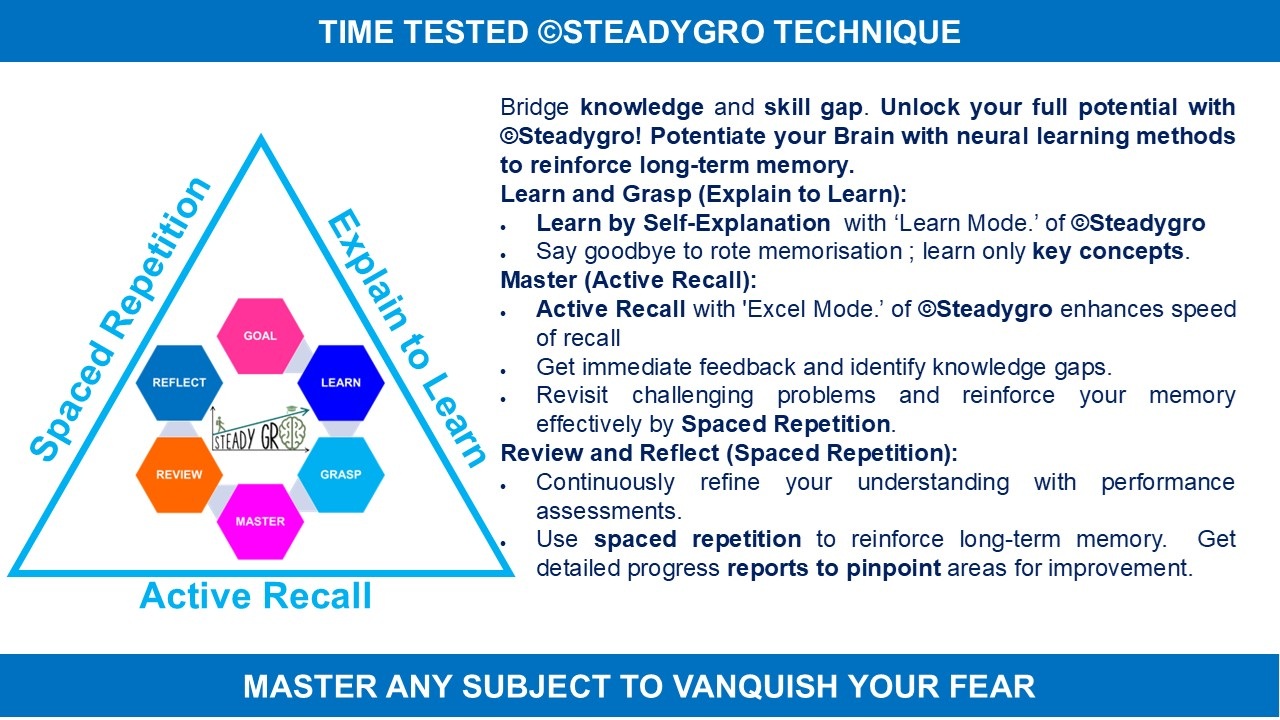
There are two modes of login. One is Learning mode and the other is Excel mode. Help files are available only in learning mode and in excel mode no help files would be available. Best method is to start practicing in Excel Mode after learning a chapter and wherever you could not answer note down all those question nos and see the help files in Help Mode. This way you remember the solution for longtime.
For scholarship you need to genuinely practice in Excel Mode
Each Exam has multiple Subjects and each Subject has multiple Chapters. Chapters have multiple Categories to segregate them (past exam papers etc.)
For each Subject, you can select all the Chapters or recent five(5) Chapters or a single Chapter for a selected Chapter Category
Questions are organised Chapter wise. Some of the questions have ONE correct answer and some multiple, indicated as (ALL). Read the question properly before answering.
Once you logout you can will go to Home Screen. It is a good idea to view your progress for that day.
With one username only one student shall practice. If more than one student practice with one user name it would not be possible to separate their progress.
Some of the questions are dynamic. The numerical answers are computed every time a question is displayed. For this type of question actual answer is not displayed.
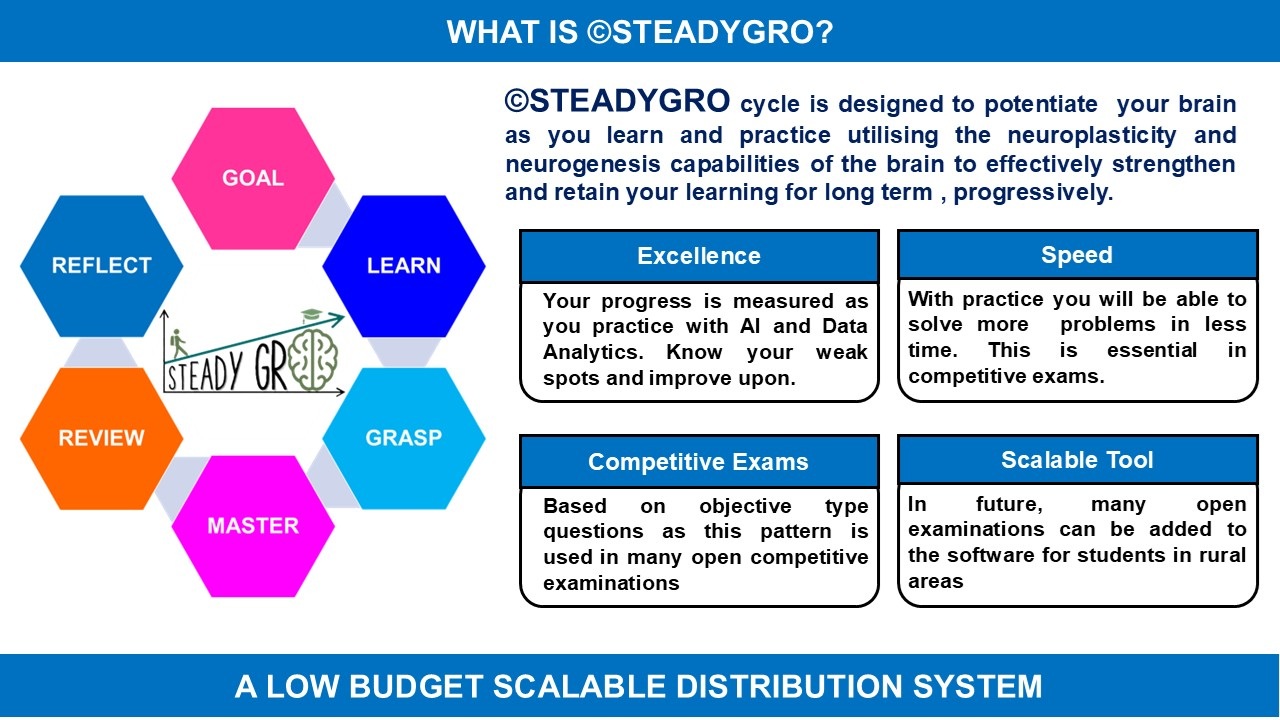
Reports with 360 degree view on Student’s performance can be generated student-wise and groups(Patron-wise) for corrective actions and to alert teachers for the skills that need further attention. Conversely, this feedback prevents students from continuing to practise skills they have already mastered, stretching them towards new concepts.
Continually support the Students and Teachers. Ensure that the job of teachers is not just to teach and they have to make sure Students also understood the subject. Verify the performance of Students over time by involving students in the evaluation of their own work. Encourage them to further improve their performance to the next level.
Place for Training
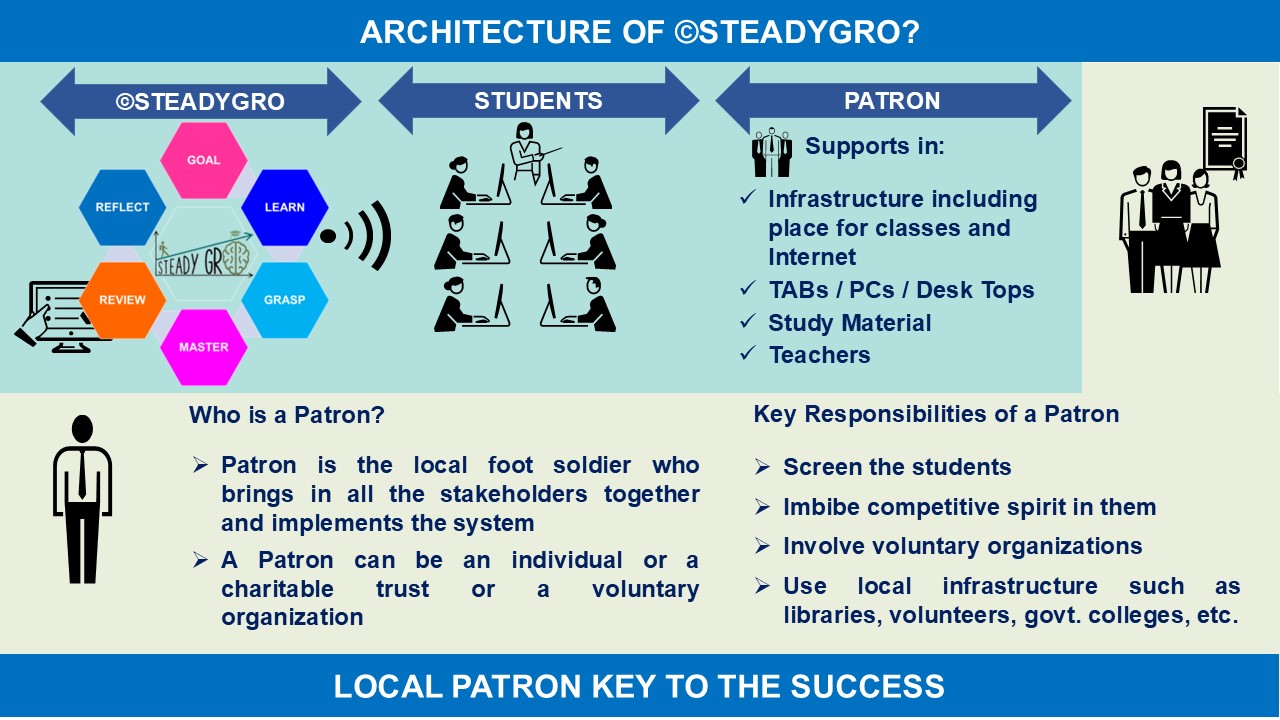
With the above systems, a local Partner shall arrange a place either form local library/community centre/institute/social organisation etc or on his own and mobilise poor students.
NATIONAL TESTING AGENCY(NTA)
The Ministry of Education (MoE), Government of India (GoI) has established the National Testing Agency (NTA) as an independent, autonomous, and self-sustained premier testing organization under the Societies Registration Act (1860) for conducting efficient, transparent, and international standardized tests in order to assess the competency of candidates for admission to premier higher education institutions with a mission to improve equity and quality in education by developing and administering research-based valid, reliable, efficient, transparent, fair and international level assessments.
NTA has created a system that is promoting teaching (by teachers), learning (by students), and assessment (by parents and institutions). NTA strongly believes in the quality, efficiency, effectiveness, equity, and security of assessments. To practice these values, NTA is constantly engaging with its stakeholders, viz. students, parents, teachers, experts, and partner institutions. The objectives of NTA, inter alia, include:
1. To conduct efficient, transparent, and international standardized tests in order to assess the competency of candidates for admission.
2. To undertake research on educational, professional, and testing systems to identify gaps in the knowledge systems and take steps for bridging them.
3. To produce and disseminate information and research on education and professional development
standards.
JOINT ENTRANCE EXAMINATION (MAIN)
The Joint Entrance Examination, JEE (Main) comprises two papers. Paper 1 is conducted for
admission to Undergraduate Engineering Programs (B.E/B.Tech.) at NITs, IIITs, other Centrally
Funded Technical Institutions (CFTIs), Institutions/Universities funded/recognized by
participating State Governments. JEE (Main) is also an eligibility test for JEE (Advanced), which
is conducted for admission to IITs. Paper 2 is conducted for admission to B. Arch and B.
Planning courses in the Country. From the year 2021, Dr. APJ Abdul Kalam Technical University
(AKTU), Lucknow and Madan Mohan Malviya University of Technology, Gorakhpur will be
using the score sheet of JEE (Main) for admission to the B.Tech./M.Tech. (Integrated)/B.Arch.
Courses in its affiliated colleges across the State.
The JEE (Main) - 2022 will be conducted in 02 (two) sessions for admissions in the next academic
session. The candidates will thus benefit in the following ways:
1. This will give two opportunities to the candidates to improve their scores in the examination if
they are not able to give their best in one attempt.
2. In the first attempt, the students will get a first-hand experience of taking an examination and
will know their mistakes which they can improve while attempting for the second time.
3.This will reduce the chances of dropping a year and droppers would not have to waste an
entire year.
4. If anyone missed the examination due to reasons beyond control (such as the Board
examination), then he/she will not have to wait for one entire year.
5. A candidate need not appear in both Sessions. However, if a candidate appears in more than
one Session then his/her best of the JEE (Main) - 2022 NTA Scores will be considered for
preparation of Merit List/ Ranking.
Mode of Examination
JEE (Main) will be conducted in the following modes:
(a) Paper 1 (B.E. /B. Tech.) in “Computer Based Test (CBT)” mode only.
Mathematics , Physics and Chemistry Objective Type - Multiple Choice Questions (MCQs-20 Nos) and Questions for which answer is a numerical value(5 out of 10, with equal weightage to Mathematics, Physics, and Chemistry Computer Based Test (CBT). Each question will carry 4 marks and total marks are 100 for each subjecct. Duration of the Test is 0300 hours
Physics Syllabus
UNIT 1: Physics and Measurement
Units of measurements, System of Units, S I Units, fundamental and derived units
Least count, significant figures
Errors in measurements
Dimensions of Physics quantities, dimensional analysis, and its applications
UNIT 2: Kinematics
The frame of reference, motion in a straight line, position-time graph, speed and velocity
Uniform and non-uniform motion, average speed and instantaneous velocity
Scalars and Vectors, Vector addition and subtraction, scalar and vector products
Unit vector, resolution of a vector, relative velocity
Motion in a plane, projectile motion
Uniform circular motion
UNIT 3: Laws of Motion
Force and inertia, Newton’s First law of motion
Momentum, Newton’s Second Law of motion, impulses
Newton’s Third Law of motion
Law of conservation of linear momentum and its applications
Equilibrium of concurrent forces
Static and kinetic friction, laws of friction, rolling friction
Dynamics of uniform circular motion: centripetal force and its applications
Vehicle on a level circular road and on a banked road
UNIT 4: Work, Energy, and Power
Work done by a constant force and a variable force
Kinetic and potential energies, work-energy theorem, power
The potential energy of a spring
Conservation of mechanical energy, conservative and non-conservative forces
Motion in a vertical circle
Elastic and inelastic collisions in one and two dimensions
UNIT 5: Rotational Motion
Centre of mass of a two-particle system and a rigid body
Basic concepts of rotational motion, moment of a force, torque
Angular momentum, conservation of angular momentum, and its applications
Moment of inertia, radius of gyration
Values of moments of inertia for simple geometrical objects
Parallel and perpendicular axes theorems and their applications
Equilibrium of rigid bodies
Rigid body rotation and equations of rotational motion
Comparison of linear and rotational motions
UNIT 6: Gravitation
The universal law of gravitation
Acceleration due to gravity and its variation with altitude and depth
Kepler’s law of planetary motion
Gravitational potential energy and gravitational potential
Escape velocity
Motion of a satellite: orbital velocity, time period, and energy
UNIT 7: Properties of Solids and Liquids
Elastic behaviour, stress-strain relationship, Hooke's Law
Young's modulus, bulk modulus, modulus of rigidity
Pressure due to a fluid column, Pascal's law, and its applications
Viscosity, Stokes' law, terminal velocity
Streamline and turbulent flow, critical velocity
Bernoulli's principle and its applications
Surface energy, surface tension, angle of contact
Applications of surface tension: drops, bubbles, and capillary rise
Heat, temperature, thermal expansion
Specific heat capacity, calorimetry, change of state, latent heat
Heat transfer: conduction, convection, and radiation
UNIT 8: Thermodynamics
Thermal equilibrium, zeroth law of thermodynamics, the concept of temperature
Heat, work, and internal energy
The first law of thermodynamics, isothermal and adiabatic processes
The second law of thermodynamics: reversible and irreversible processes
UNIT 9: Kinetic Theory of Gases
Equation of state of a perfect gas, work done on compressing a gas
Kinetic theory of gases: assumptions, concept of pressure
Kinetic interpretation of temperature
RMS speed of gas molecules
Degrees of freedom, law of equipartition of energy
Applications to specific heat capacities of gases
Mean free path, Avogadro's number
UNIT 10: Oscillations and Waves
Oscillations and periodic motion: time period, frequency, displacement as a function of time
Periodic functions, simple harmonic motion (S.H.M.) and its equation
Phase, oscillations of a spring: restoring force and force constant
Energy in S.H.M.: kinetic and potential energies
Simple pendulum: derivation of expression for its time period
Wave motion: longitudinal and transverse waves
Speed of a travelling wave, displacement relation for a progressive wave
Principle of superposition of waves, reflection of waves
Standing waves in strings and organ pipes, fundamental mode, and harmonics
Beats
UNIT 11: ELECTROSTATICS
Electric charges: Conservation of charge. Coulomb's law forces between two point charges, forces between multiple charges: superposition principle and continuous charge distribution.
Electric field: Electric field due to a point charge, Electric field lines. Electric dipole, Electric field due to a dipole. Torque on a dipole in a uniform electric field.
Electric flux. Gauss's law and its applications to find field due to infinitely long uniformly charged straight wire, uniformly charged infinite plane sheet, and uniformly charged thin spherical shell.
Electric potential and its calculation for a point charge, electric dipole, and system of charges; potential difference, Equipotential surfaces, Electrical potential energy of a system of two point charges and of electric dipole in an electrostatic field.
Conductors and insulators. Dielectrics and electric polarization, capacitors and capacitances, combination of capacitors in series and parallel, and capacitance of a parallel plate capacitor with and without dielectric medium between the plates. Energy stored in a capacitor.
UNIT 12: CURRENT ELECTRICITY
Electric current. Drift velocity, mobility, and their relation with electric current. Ohm's law. Electrical resistance. V-I characteristics of Ohmic and non-ohmic conductors.
Electrical energy and power. Electrical resistivity and conductivity. Series and parallel combinations of resistors; Temperature dependence of resistance.
Internal resistance, potential difference, and emf of a cell, combination of cells in series and parallel. Kirchhoff’s laws and their applications. Wheatstone bridge. Metre Bridge.
UNIT 13: MAGNETIC EFFECTS OF CURRENT AND MAGNETISM
Biot - Savart law and its application to the current carrying circular loop. Ampere's law and its applications to infinitely long current carrying straight wire and solenoid.
Force on a moving charge in uniform magnetic and electric fields.
Force on a current-carrying conductor in a uniform magnetic field. The force between two parallel currents carrying conductors-definition of ampere.
Torque experienced by a current loop in a uniform magnetic field: Moving coil galvanometer, its sensitivity, and conversion to ammeter and voltmeter.
Current loop as a magnetic dipole and its magnetic dipole moment. Bar magnet as an equivalent solenoid, magnetic field lines; Magnetic field due to a magnetic dipole (bar magnet) along its axis and perpendicular to its axis.
Torque on a magnetic dipole in a uniform magnetic field. Para-, dia- and ferromagnetic substances with examples, the effect of temperature on magnetic properties.
UNIT 14: ELECTROMAGNETIC INDUCTION AND ALTERNATING CURRENTS
Electromagnetic induction: Faraday's law. Induced emf and current: Lenz’s Law, Eddy currents. Self and mutual inductance.
Alternating currents, peak and RMS value of alternating current/voltage: reactance and impedance: LCR series circuit, resonance: power in AC circuits, wattless current. AC generator and transformer.
UNIT 15: ELECTROMAGNETIC WAVES
Displacement current. Electromagnetic waves and their characteristics, Transverse nature of electromagnetic waves, Electromagnetic spectrum (radio waves, microwaves, infrared, visible, ultraviolet, X-rays, Gamma rays), Applications of e.m. waves.
UNIT 16: OPTICS
Reflection of light, spherical mirrors, mirror formula. Refraction of light at plane and spherical surfaces, thin lens formula, and lens maker formula.
Total internal reflection and its applications. Magnification. Power of a Lens. Combination of thin lenses in contact. Refraction of light through a prism.
Microscope and Astronomical Telescope (reflecting and refracting) and their magnifying powers.
Wave optics: wavefront and Huygens' principle. Laws of reflection and refraction using Huygens principle.
Interference, Young's double-slit experiment, and expression for fringe width, coherent sources, and sustained interference of light. Diffraction due to a single slit, width of central maximum.
Polarization, plane-polarized light: Brewster's law, uses of plane-polarized light and Polaroid.
UNIT 17: DUAL NATURE OF MATTER AND RADIATION
Dual nature of radiation. Photoelectric effect. Hertz and Lenard's observations; Einstein's photoelectric equation: particle nature of light.
Matter waves-wave nature of particle, de Broglie relation.
UNIT 18: ATOMS AND NUCLEI
Alpha-particle scattering experiment; Rutherford's model of atom; Bohr model, energy levels, hydrogen spectrum.
Composition and size of nucleus, atomic masses, Mass-energy relation, mass defect; binding energy per nucleon and its variation with mass number, nuclear fission, and fusion.
UNIT 19: ELECTRONIC DEVICES
Semiconductors; semiconductor diode: I-V characteristics in forward and reverse bias; diode as a rectifier; I-V characteristics of LED, photodiode, solar cell, and Zener diode; Zener diode as a voltage regulator.
Logic gates (OR, AND, NOT, NAND, and NOR).
UNIT 20: EXPERIMENTAL SKILLS
Familiarity with the basic approach and observations of the experiments and activities:
Vernier calipers - its use to measure the internal and external diameter and depth of a vessel.
Screw gauge - its use to determine the thickness/diameter of thin sheet/wire.
Simple Pendulum - dissipation of energy by plotting a graph between the square of amplitude and time.
Metre Scale - the mass of a given object by the principle of moments.
Young's modulus of elasticity of the material of a metallic wire.
Surface tension of water by capillary rise and effect of detergents.
Coefficient of Viscosity of a given viscous liquid by measuring the terminal velocity of a given spherical body.
Speed of sound in air at room temperature using a resonance tube.
Specific heat capacity of a given (i) solid and (ii) liquid by method of mixtures.
The resistivity of the material of a given wire using a metre bridge.
The resistance of a given wire using Ohm's law.
Resistance and figure of merit of a galvanometer by half deflection method.
The focal length of:
Convex mirror
Concave mirror
Convex lens, using the parallax method.
The plot of the angle of deviation vs angle of incidence for a triangular prism.
The refractive index of a glass slab using a travelling microscope.
Characteristic curves of a p-n junction diode in forward and reverse bias.
Characteristic curves of a Zener diode and finding reverse breakdown voltage.
Identification of Diode, LED, Resistor, and Capacitor from a mixed collection of such items.
CHEMISTRY - PHYSICAL CHEMISTRY
UNIT I: SOME BASIC CONCEPTS IN CHEMISTRY
Topics covered:
Matter and its nature
Dalton's atomic theory: Concept of atom, molecule, element, and compound
Laws of chemical combination
Atomic and molecular masses, mole concept, molar mass, percentage composition
Empirical and molecular formulae
Chemical equations and stoichiometry
UNIT 2: ATOMIC STRUCTURE
Topics covered:
Nature of electromagnetic radiation, photoelectric effect
Spectrum of the hydrogen atom
Bohr model of a hydrogen atom - its postulates
Derivation of relations for the energy of the electron and radii of the different orbits
Limitations of Bohr's model
Dual nature of matter, de Broglie's relationship
Heisenberg uncertainty principle
Quantum mechanics and the quantum mechanical model of the atom
Concept of atomic orbitals as one-electron wave functions
Various quantum numbers (principal, angular momentum, and magnetic quantum numbers) and their significance
Shapes of s, p, and d orbitals, electron spin, and spin quantum number
Rules for filling electrons in orbitals – Aufbau principle, Pauli's exclusion principle, and Hund's rule
Electronic configuration of elements and extra stability of half-filled and completely filled orbitals
UNIT 3: CHEMICAL BONDING AND MOLECULAR STRUCTURE
Topics covered:
Kossel-Lewis approach to chemical bond formation
Concept of ionic and covalent bonds
Ionic Bonding: Formation and factors affecting the formation of ionic bonds
Covalent Bonding: Concept of electronegativity, Fajan’s rule, dipole moment
Valence Shell Electron Pair Repulsion (VSEPR) theory and shapes of simple molecules
Quantum mechanical approach to covalent bonding: Valence bond theory and hybridization
Molecular Orbital Theory: LCAOs, types of molecular orbitals, bond order, bond length, and bond energy
Elementary idea of metallic bonding and hydrogen bonding
UNIT 4: CHEMICAL THERMODYNAMICS
Topics covered:
Fundamentals of thermodynamics: System, surroundings, and state functions
The first law of thermodynamics: Concept of work, heat, internal energy, enthalpy
Hess’s law of constant heat summation and enthalpies of various processes
The second law of thermodynamics: Spontaneity of processes
ΔG (Standard Gibbs energy change) and equilibrium constant
UNIT 5: SOLUTIONS
Topics covered:
Methods for expressing concentration: molality, molarity, mole fraction
Vapour pressure of solutions and Raoult's Law
Colligative properties of dilute solutions: lowering of vapour pressure, freezing point depression, boiling point elevation, and osmotic pressure
Determination of molecular mass using colligative properties
Van’t Hoff factor and its significance
UNIT 6: EQUILIBRIUM
Topics covered:
Dynamic equilibrium and the law of chemical equilibrium
Equilibrium constants (Kp and Kc) and factors affecting equilibrium
Le Chatelier’s principle and its applications
Ionic equilibrium: Acid-base equilibria, pH scale, common ion effect, buffer solutions
UNIT 7: REDOX REACTIONS AND ELECTROCHEMISTRY
Topics covered:
Electronic concepts of oxidation and reduction
Redox reactions and balancing of reactions
Electrochemical cells: Galvanic and electrolytic cells, Nernst equation, and its applications
Electrolytic conduction and cell potential
UNIT 8: CHEMICAL KINETICS
Topics covered:
Factors affecting the rate of reactions: Concentration, temperature, pressure, and catalysts
Order and molecularity of reactions, rate law, rate constant
Arrhenius theory and activation energy
Collision theory of bimolecular gaseous reactions
INORGANIC CHEMISTRY
UNIT 9: CLASSIFICATION OF ELEMENTS AND PERIODICITY IN PROPERTIES
Topics covered:
Modern periodic law and the present form of the periodic table
s, p, d, and f block elements
Periodic trends in properties of elements: Atomic and ionic radii, ionization enthalpy, electron gain enthalpy
Valence, oxidation states, and chemical reactivity
UNIT 10: p-BLOCK ELEMENTS
Group -13 to Group 18 Elements
Topics covered:
General introduction: Electronic configuration and trends in physical and chemical properties of elements across the periods and down the groups
Unique behaviour of the first element in each group
UNIT 11: d- AND f-BLOCK ELEMENTS
Transition Elements
Topics covered:
General introduction, electronic configuration, occurrence and characteristics
General trends in properties of the first-row transition elements: Physical properties, ionization enthalpy, oxidation states, atomic radii, colour, catalytic behaviour, magnetic properties, complex formation, interstitial compounds, alloy formation
Preparation, properties, and uses of K2Cr2O7, and KMnO4
Inner Transition Elements
Topics covered:
Lanthanoids - Electronic configuration, oxidation states, and lanthanoid contraction
Actinoids - Electronic configuration and oxidation states
IUPAC nomenclature of mononuclear coordination compounds
Isomerism, bonding (Valence bond approach), and basic ideas of Crystal Field Theory
Colour and magnetic properties of coordination compounds
Importance of coordination compounds in qualitative analysis, metal extraction, and biological systems
ORGANIC CHEMISTRY
UNIT 13: PURIFICATION AND CHARACTERISATION OF ORGANIC COMPOUNDS
Topics covered:
Purification methods: Crystallization, sublimation, distillation, differential extraction, and chromatography - principles and applications
Qualitative analysis: Detection of nitrogen, sulphur, phosphorus, and halogens
Quantitative analysis (basic principles): Estimation of carbon, hydrogen, nitrogen, halogens, sulphur, and phosphorus
Calculations of empirical and molecular formulae: Numerical problems in organic quantitative analysis
UNIT 14: SOME BASIC PRINCIPLES OF ORGANIC CHEMISTRY
Topics covered:
Tetravalency of carbon: Shapes of simple molecules and hybridization (s and p)
Classification of organic compounds based on functional groups (including halogens, oxygen, nitrogen, and sulphur)
Homologous series and isomerism - structural and stereoisomerism
Nomenclature (Trivial and IUPAC)
Covalent bond fission: Homolytic and heterolytic, free radicals, carbocations, and carbanions
Stability of carbocations and free radicals, electrophiles, and nucleophiles
Electronic displacement in a covalent bond - Inductive effect, electrometric effect, resonance, and hyperconjugation
Common types of organic reactions: Substitution, addition, elimination, and rearrangement
UNIT 15: HYDROCARBONS
Topics covered:
Classification, isomerism, IUPAC nomenclature, general methods of preparation, properties, and reactions
Alkanes: Conformations (Sawhorse and Newman projections of ethane), Mechanism of halogenation of alkanes
Alkenes: Geometrical isomerism, Mechanism of electrophilic addition, addition of hydrogen, halogens, water, and hydrogen halides
Ozonolysis and polymerization of alkenes
Alkynes: Acidic character, Addition of hydrogen, halogens, water, and hydrogen halides, Polymerization
Aromatic hydrocarbons: Nomenclature, benzene structure and aromaticity, Mechanism of electrophilic substitution, halogenation, nitration, Friedel-Craft's alkylation and acylation, directive influence of functional groups in mono-substituted benzene
UNIT 16: ORGANIC COMPOUNDS CONTAINING HALOGENS
Topics covered:
General methods of preparation, properties, and reactions; Nature of C-X bond
Mechanisms of substitution reactions
Uses and Environmental effects of chloroform, iodoform, freons, and DDT
UNIT 17: ORGANIC COMPOUNDS CONTAINING OXYGEN
Topics covered:
General methods of preparation, properties, reactions, and uses
Alcohols: Identification of primary, secondary, and tertiary alcohols; mechanism of dehydration
Aldehydes and Ketones: Nucleophilic addition reactions, reactivity, oxidation, reduction, aldol condensation, Cannizzaro reaction, chemical tests to distinguish between aldehydes and ketones
Carboxylic Acids: Acidic strength and factors affecting it
UNIT 18: ORGANIC COMPOUNDS CONTAINING NITROGEN
Topics covered:
General methods of preparation, properties, reactions, and uses
Amines: Nomenclature, classification, structure, basic character, and identification of primary, secondary, and tertiary amines
Diazonium Salts: Importance in synthetic organic chemistry
UNIT 19: BIOMOLECULES
Topics covered:
Carbohydrates: Classification, aldoses and ketoses, monosaccharides (glucose and fructose), oligosaccharides (sucrose, lactose, maltose)
Proteins: α-amino acids, peptide bond, polypeptides, protein structure (primary, secondary, tertiary, quaternary), denaturation of proteins, enzymes
Vitamins: Classification and functions
Nucleic Acids: Chemical constitution of DNA and RNA, biological functions of nucleic acids
Hormones: General introduction
UNIT 20: PRINCIPLES RELATED TO PRACTICAL CHEMISTRY
Detection of Extra Elements and Functional Groups in Organic Compounds
Detection of extra elements: Nitrogen, Sulphur, and Halogens in organic compounds.
Enthalpy of neutralization: Strong acid and strong base
Preparation of sols: Lyophilic and lyophobic sols
Kinetic study: Reaction of iodide ions with hydrogen peroxide at room temperature
Mathematics
UNIT 1: SETS, RELATIONS, AND FUNCTIONS
Sets and their representation: Union, intersection, and complement of sets and their algebraic properties.
Power set.
Relation: Type of relations, equivalence relations.
Functions: One-one, into, and onto functions.
The composition of functions.
UNIT 2: COMPLEX NUMBERS AND QUADRATIC EQUATIONS
Complex numbers as ordered pairs of reals.
Representation of complex numbers in the form \(a + ib\) and their representation in a plane (Argand diagram).
Algebra of complex numbers, modulus, and argument (or amplitude) of a complex number.
Quadratic equations in real and complex number system and their solutions.
Relations between roots and coefficients, nature of roots, formation of quadratic equations with given roots.
UNIT 3: MATRICES AND DETERMINANTS
Matrices: Algebra of matrices, types of matrices.
Determinants and matrices of order two and three, evaluation of determinants.
Area of triangles using determinants.
Adjoint and evaluation of inverse of a square matrix using determinants.
Test of consistency and solution of simultaneous linear equations in two or three variables using matrices.
UNIT 4: PERMUTATIONS AND COMBINATIONS
The fundamental principle of counting.
Permutation as an arrangement and combination as selection.
Meaning of P(n,r) and C(n,r), simple applications.
UNIT 5: BINOMIAL THEOREM AND ITS SIMPLE APPLICATIONS
Binomial theorem for a positive integral index.
General term and middle term.
Simple applications.
UNIT 6: SEQUENCE AND SERIES
Arithmetic and Geometric progressions.
Insertion of arithmetic, geometric means between two given numbers.
Relation between A.M and G.M.
UNIT 7: LIMIT, CONTINUITY, AND DIFFERENTIABILITY
Real-valued functions, algebra of functions, polynomials, rational, trigonometric, logarithmic, and exponential functions, inverse function.
Graphs of simple functions.
Limits, continuity, and differentiability.
Differentiation of the sum, difference, product, and quotient of two functions.
Differentiation of trigonometric, inverse trigonometric, logarithmic, exponential, composite, and implicit functions.
Derivatives of order up to two.
Applications of derivatives: Rate of change of quantities, monotonic-increasing and decreasing functions, maxima and minima of functions of one variable.
UNIT 8: INTEGRAL CALCULUS
Concepts and Integrals
Integral as an anti-derivative, fundamental integrals involving algebraic, trigonometric, exponential, and logarithmic functions.
Methods of Integration
Integration by substitution.
Integration by parts.
Integration by partial fractions.
Integration using trigonometric identities.
Simple Integrals
Evaluation of simple integrals of the following types:
\(\int \frac{dx}{x^2 + a^2}\)
\(\int \frac{dx}{\sqrt{x^2 \pm a^2}}\)
\(\int \frac{dx}{a^2 - x^2}\)
\(\int \frac{dx}{\sqrt{a^2 - x^2}}\)
\(\int \frac{dx}{a x^2 + b x + c}\)
\(\int \frac{dx}{\sqrt{a x^2 + b x + c}}\)
\(\int \frac{(p x + q) \, dx}{a x^2 + b x + c}\)
\(\int \frac{(p x + q) \, dx}{\sqrt{a x^2 + b x + c}}\)
\(\int \sqrt{a^2 \pm x^2} \, dx\)
\(\int \sqrt{x^2 - a^2} \, dx\)
The Fundamental Theorem of Calculus
The fundamental theorem of calculus relates differentiation to integration, providing a way to evaluate definite integrals.
Properties of Definite Integrals
Evaluation of definite integrals.
Determining areas of the regions bounded by simple curves in standard form.
UNIT 9: DIFFRENTIAL EQUATIONS
Ordinary differential equations, their order, and degree, the solution of differential equation by
the method of separation of variables, solution of a homogeneous and linear differential
equation of the type
\(\frac{dx}{dy} + p(x)y = q(x)\)
UNIT 10: COORDINATE GEOMETRY
Cartesian system of rectangular coordinates in a plane, distance formula, section formula, locus, and its equation, the slope of a line, parallel and perpendicular lines, intercepts of a line on the coordinate axis.
Straight Line
Various forms of equations of a line.
Intersection of lines, angles between two lines.
Conditions for concurrence of three lines.
The distance of a point from a line.
Coordinates of the centroid, orthocenter, and circumcenter of a triangle.
Circle and Conic Sections
Standard form of equations of a circle, the general form of the equation of a circle, its radius and center.
Equation of a circle when the endpoints of a diameter are given.
Points of intersection of a line and a circle with the center at the origin.
Sections of conics, equations of conic sections (parabola, ellipse, and hyperbola) in standard forms.
UNIT 11: THREE DIMENSIONAL GEOMETRY
Coordinates of a point in space, the distance between two points, section formula, direction ratios, and direction cosines. The angle between two intersecting lines. Skew lines, the shortest distance between them, and its equation. Equations of a line.
UNIT 12: VECTOR ALGEBRA
Vectors and scalars, addition of vectors, components of a vector in two and three-dimensional space, scalar and vector products.
UNIT 13: STATISTICS AND PROBABILITY
Measures of Dispersion
Calculation of mean, median, mode of grouped and ungrouped data.
Calculation of standard deviation, variance, and mean deviation for grouped and ungrouped data.
Probability
Probability of an event, addition and multiplication theorems of probability.
Baye's theorem, probability distribution of a random variate.
UNIT 14: TRIGONOMETRY
Trigonometrical identities and trigonometrical functions, inverse trigonometrical functions, and their properties.
NEET(UG)
The NEET (UG) is being conducted by the National Testing Agency (NTA) since
2019 with the approval of the Ministry of Health and Family Welfare and the
Ministry of Human Resource Development (which is now known as the Ministry of
Education), in pursuance of the direction of the Hon’ble Supreme Court of India vide
Judgement dated 22.11. 2018 in C.A. No. 11230 of 2018 in the matter of CBSE Vs.
T.K. Rangarajan & Ors. (Para 22).
As per Section 14 of The National Medical Commission Act, 2019 (Appendix-I),
which has come into force on 24th September 2020, NEET (UG) has to be conducted
as a common and uniform National Eligibility-cum-Entrance Test (NEET) for
admission to the undergraduate medical education in all medical institutions,
including those governed under any other law in force.
The Constitutional validity of this Act has been upheld by the Hon’ble Apex Court
vide its Judgement dated 29 April 2020 in the matter of Christian Medical College
Vellore Association vs. UOI & Ors., while disposing of the transferred Case (Civil)
No. 98 of 2021 & connected Transferred Cases, Writ Petitions & SLP.
NEET (UG) has been a qualifying entrance exam since 2020 for admission to the
MBBS/BDS courses in AIIMS and JIPMER (although such Medical Institutions are
governed under separate Statutes), as per the proviso under Section 14 (1) of the
NMC Act (2019).
The norms/procedure/timelines followed in conducting NEET (UG) are as provided
under Section 10 D of the Indian Medical Council Act and the relevant Regulations
on Graduate Medical Education as notified under Section 33 of the said Act from
time to time and as per Section 14 of the NMC Act (2019) since 2020.2.1.6 Similar
provisions for admission to the BDS course are contained under the Dentists Act,
1948 and Regulations made thereunder.
The Test pattern of NEET (UG) - 2022 comprises four Subjects(Physics, Chemistry , Botany and Zoology). Each subject will consist of two sections. Section A will consist of 35 Questions and Section B will have 15 Questions, out of these 15 Questions, candidates can choose to attempt any 10 Questions. So, the total number of questions and utilization of time will remain the same.Correct option marked will be given (4) marks and Incorrect option marked will be minus one (-1)mark. Unattempted/Unanswered Questions will be given no marks.The duration of the test would be three (03) hours and 20 minutes.
Physics Syllabus
UNIT 1: PHYSICS AND MEASUREMENT
Units of measurements, System of Units, SI Units, fundamental and derived units, least count, significant figures
Errors in measurements, Dimensions of Physics quantities, dimensional analysis, and its applications
UNIT 2: KINEMATICS
Frame of reference, motion in a straight line, Position-time graph, speed and velocity
Uniform and non-uniform motion, average speed and instantaneous velocity, uniformly accelerated motion
Velocity-time, position-time graph, relations for uniformly accelerated motion
Scalars and Vectors, Vector addition and subtraction, scalar and vector products
Unit Vector, Resolution of a Vector, Relative Velocity, Motion in a plane, Projectile Motion, Uniform Circular Motion
UNIT 3: LAWS OF MOTION
Force and inertia, Newton’s First law of motion; Momentum, Newton’s Second Law of motion, Impulses
Newton’s Third Law of motion, Law of conservation of linear momentum and its applications
Equilibrium of concurrent forces
Static and Kinetic friction, laws of friction, rolling friction
Dynamics of uniform circular motion: centripetal force and its applications: vehicle on a level circular road, vehicle on a banked road
UNIT 4: WORK, ENERGY, AND POWER
Work done by a constant force and a variable force; kinetic and potential energies
Work-energy theorem, power
Potential energy of spring conservation of mechanical energy, conservative and non-conservative forces
Motion in a vertical circle: Elastic and inelastic collisions in one and two dimensions
UNIT 5: ROTATIONAL MOTION
Centre of mass of a two-particle system, Centre of mass of a rigid body
Basic concepts of rotational motion; moment of a force; torque
Angular momentum, conservation of angular momentum and its applications
Moment of inertia, radius of gyration, values of moments of inertia for simple geometrical objects
Parallel and perpendicular axes theorems and their applications
Equilibrium of rigid bodies, rigid body rotation and equations of rotational motion
Comparison of linear and rotational motions
UNIT 6: GRAVITATION
Universal law of gravitation
Acceleration due to gravity and its variation with altitude and depth
Surface energy and surface tension, angle of contact, excess of pressure across a curved surface
Applications of surface tension - drops, bubbles, and capillary rise
Heat, temperature, thermal expansion; specific heat capacity, calorimetry
Change of state, latent heat
Heat transfer - conduction, convection, and radiation
UNIT 8: THERMODYNAMICS
Thermal equilibrium, zeroth law of thermodynamics, concept of temperature
Heat, work, and internal energy
First law of thermodynamics, isothermal and adiabatic processes
Second law of thermodynamics: reversible and irreversible processes
UNIT 9: KINETIC THEORY OF GASES
Equation of state of a perfect gas, work done on compressing a gas
Kinetic theory of gases - assumptions, concept of pressure
Kinetic interpretation of temperature
RMS speed of gas molecules
Degrees of freedom, Law of equipartition of energy and applications to specific heat capacities of gases
Mean free path, Avogadro's number
UNIT 10: OSCILLATIONS AND WAVES
Oscillations and periodic motion – time period, frequency, displacement as a function of time
Periodic functions, Simple harmonic motion (S.H.M.) and its equation
Phase: oscillations of a spring - restoring force and force constant
Energy in S.H.M. - Kinetic and potential energies
Simple pendulum - derivation of expression for its time period
Wave motion, Longitudinal and transverse waves, speed of travelling wave
Displacement relation for a progressive wave
Principle of superposition of waves, reflection of waves
Standing waves in strings and organ pipes, fundamental mode and harmonics
Beats
UNIT 11: ELECTROSTATICS
Electric charges: Conservation of charge
Coulomb's law - forces between two point charges, forces between multiple charges
Superposition principle and continuous charge distribution
Electric field: Electric field due to a point charge, Electric field lines
Electric dipole, Electric field due to a dipole, Torque on a dipole in a uniform electric field
Electric flux, Gauss's law and its applications
Electric potential and its calculation for a point charge, electric dipole and system of charges
Potential difference, Equipotential surfaces
Electrical potential energy of a system of two point charges and of electric dipole in an electrostatic field
Conductors and insulators, Dielectrics and electric polarization
Capacitors and capacitances, Combination of capacitors in series and parallel
Capacitance of a parallel plate capacitor with and without dielectric medium
Energy stored in a capacitor
UNIT 12: CURRENT ELECTRICITY
Electric current. Drift velocity, mobility and their relation with electric current. Ohm's law.
Electrical resistance. V-I characteristics of Ohmic and non-ohmic conductors. Electrical energy
and power. Electrical resistivity and conductivity. Series and parallel combinations of resistors;
Temperature dependence of resistance.
Internal resistance, potential difference and emf of a cell, a combination of cells in series and
parallel. Kirchhoff’s laws and their applications. Wheatstone bridge. Metre Bridge.
UNIT 13: MAGNETIC EFFECTS OF CURRENT AND MAGNETISM
Biot-Savart law and its application to a current-carrying circular loop. Ampere's law and its
applications to infinitely long current-carrying straight wire and solenoid. Force on a moving
charge in uniform magnetic and electric fields.
Force on a current-carrying conductor in a uniform magnetic field. The force between two parallel
current-carrying conductors-definition of ampere. Torque experienced by a current loop in a
uniform magnetic field: Moving coil galvanometer, its sensitivity, and conversion to ammeter and
voltmeter.
Current loop as a magnetic dipole and its magnetic dipole moment. Bar magnet as an equivalent
solenoid, magnetic field lines; Magnetic field due to a magnetic dipole (bar magnet) along its
axis and perpendicular to its axis. Torque on a magnetic dipole in a uniform magnetic field. Para-,
dia- and ferromagnetic substances with examples, effect of temperature on magnetic properties.
UNIT 14: ELECTROMAGNETIC INDUCTION AND ALTERNATING CURRENTS
Electromagnetic induction: Faraday's law. Induced emf and current: Lenz’s Law, Eddy currents.
Self and mutual inductance. Alternating currents, peak and RMS value of alternating current/
voltage: reactance and impedance: LCR series circuit, resonance: power in AC circuits, wattless
current. AC generator and transformer.
UNIT 15: ELECTROMAGNETIC WAVES
Displacement current. Electromagnetic waves and their characteristics, Transverse nature of
electromagnetic waves, Electromagnetic spectrum (radio waves, microwaves, infrared, visible,
ultraviolet, X-rays, Gamma rays), Applications of electromagnetic waves.
UNIT 16: OPTICS
Reflection of light, spherical mirrors, mirror formula. Refraction of light at plane and spherical
surfaces, thin lens formula and lens maker formula. Total internal reflection and its applications.
Magnification. Power of a lens. Combination of thin lenses in contact. Refraction of light through
a prism. Microscope and Astronomical Telescope (reflecting and refracting) and their magnifying
powers.
Wave optics: wavefront and Huygens' principle. Laws of reflection and refraction using Huygens
principle. Interference, Young's double-slit experiment and expression for fringe width, coherent
sources, and sustained interference of light. Diffraction due to a single slit, width of central
maximum. Polarization, plane-polarized light: Brewster's law, uses of plane-polarized light and
Polaroid.
UNIT 17: DUAL NATURE OF MATTER AND RADIATION
Dual nature of radiation. Photoelectric effect. Hertz and Lenard's observations; Einstein's
photoelectric equation: particle nature of light. Matter waves-wave nature of particle, de Broglie
relation.
UNIT 18: ATOMS AND NUCLEI
Alpha-particle scattering experiment; Rutherford's model of atom; Bohr model, energy levels,
hydrogen spectrum. Composition and size of nucleus, atomic masses, Mass-energy relation, mass
defect; binding energy per nucleon and its variation with mass number, nuclear fission, and fusion.
UNIT 19: ELECTRONIC DEVICES
Semiconductors; semiconductor diode: I-V characteristics in forward and reverse bias; diode as a
rectifier; I-V characteristics of LED, the photodiode, solar cell, and Zener diode; Zener diode as
a voltage regulator. Logic gates (OR, AND, NOT, NAND, and NOR).
UNIT 20: EXPERIMENTAL SKILLS
Vernier calipers - its use to measure the internal and external diameter and depth of a vessel.
Screw gauge - its use to determine the thickness/diameter of thin sheet/wire.
Simple Pendulum - dissipation of energy by plotting a graph between the square of amplitude
and time.
Metre Scale - the mass of a given object by the principle of moments.
Young's modulus of elasticity of the material of a metallic wire.
Surface tension of water by capillary rise and effect of detergents.
Coefficient of Viscosity of a given viscous liquid by measuring the terminal velocity of a given
spherical body.
Speed of sound in air at room temperature using a resonance tube.
Specific heat capacity of a given (i) solid and (ii) liquid by the method of mixtures.
The resistivity of the material of a given wire using a metre bridge.
The resistance of a given wire using Ohm's law.
Resistance and figure of merit of a galvanometer by half deflection method.
The focal length of:
Convex mirror
Concave mirror
Convex lens, using the parallax method.
The plot of the angle of deviation vs angle of incidence for a triangular prism.
Refractive index of a glass slab using a travelling microscope.
Characteristic curves of a p-n junction diode in forward and reverse bias.
Characteristic curves of a Zener diode and finding reverse break down voltage.
Identification of Diode. LED,. Resistor. A capacitor from a mixed collection of such items.
Chemistry Syllabus
PHYSICAL CHEMISTRY
UNIT 1: SOME BASIC CONCEPTS IN CHEMISTRY
Matter and its nature, Dalton's atomic theory: Concept of atom, molecule, element, and compound.
Laws of chemical combination; Atomic and molecular masses.
Mole concept, molar mass, percentage composition, empirical and molecular formulae.
Chemical equations and stoichiometry.
UNIT 2: ATOMIC STRUCTURE
Nature of electromagnetic radiation, photoelectric effect; Spectrum of the hydrogen atom.
Bohr model of a hydrogen atom - postulates, energy of electrons, limitations.
Dual nature of matter, de Broglie's relationship, Heisenberg uncertainty principle.
Quantum mechanical model of the atom, atomic orbitals, quantum numbers.
Shapes of s, p, and d orbitals; Rules for filling electrons in orbitals.
UNIT 3: CHEMICAL BONDING AND MOLECULAR STRUCTURE
Kossel-Lewis approach, ionic and covalent bonds.
Valence Shell Electron Pair Repulsion (VSEPR) theory.
Valence bond theory, hybridization, resonance.
Molecular Orbital Theory, bond order, bond energy.
Metallic bonding and hydrogen bonding.
UNIT 4: CHEMICAL THERMODYNAMICS
System and surroundings, types of processes.
First law of thermodynamics, enthalpy, Hess's law.
Second law of thermodynamics, spontaneity, Gibbs energy.
UNIT 5: SOLUTIONS
Concentration of solutions: molality, molarity, mole fraction, percentage.
Colligative properties: relative lowering of vapor pressure, freezing point depression, boiling point elevation, osmotic pressure.
Abnormal molar mass, van't Hoff factor.
UNIT 6: EQUILIBRIUM
Dynamic equilibrium, physical and chemical processes.
Calculations of empirical formulae and molecular formulae: Numerical problems in organic quantitative analysis.
Unit 14: Some Basic Principles of Organic Chemistry
Tetravalency of carbon: Shapes of simple molecules - hybridization (s and p).
Classification of organic compounds based on functional groups: and those containing halogens, oxygen, nitrogen, and sulphur.
Homologous series: Isomerism - structural and stereoisomerism.
Nomenclature (Trivial and IUPAC).
Covalent bond fission - Homolytic and heterolytic: free radicals, carbocations, and carbanions; stability of carbocations and free radicals, electrophiles, and nucleophiles.
Electronic displacement in a covalent bond - Inductive effect, electrometric effect, resonance, and hyperconjugation.
Common types of organic reactions- Substitution, addition, elimination, and rearrangement.
Unit 15: Hydrocarbons
Classification, isomerism, IUPAC nomenclature, general methods of preparation, properties, and reactions.
Alkanes - Conformations: Sawhorse and Newman projections (of ethane): Mechanism of halogenation of alkanes.
Alkenes - Geometrical isomerism: Mechanism of electrophilic addition: addition of hydrogen, halogens, water, hydrogen halides (Markownikoff's and peroxide effect): Ozonolysis and polymerization.
Alkynes - Acidic character: Addition of hydrogen, halogens, water, and hydrogen halides: Polymerization.
Aromatic hydrocarbons - Nomenclature, benzene - structure and aromaticity: Mechanism of electrophilic substitution: halogenation, nitration, Friedel-Craft's alkylation and acylation, directive influence of the functional group in monosubstituted benzene.
Unit 16: Organic Compounds Containing Halogens
General methods of preparation, properties, and reactions; Nature of C-X bond; Mechanisms of substitution reactions.
Uses; Environmental effects of chloroform, iodoform, freons, and DDT.
Unit 17: Organic Compounds Containing Oxygen
Alcohols, Phenols, and Ethers
Alcohols: Identification of primary, secondary, and tertiary alcohols; mechanism of dehydration.
Nature of carbonyl group; Nucleophilic addition to >C=O group, relative reactivities of aldehydes and ketones.
Important reactions: Nucleophilic addition reactions (addition of HCN, NH3, and its derivatives), Grignard reagent; oxidation; reduction (Wolf-Kishner and Clemmensen).
Acidity of α-hydrogen; aldol condensation, Cannizzaro reaction, Haloform reaction.
Chemical tests to distinguish between aldehydes and ketones.
Carboxylic Acids
Acidic strength and factors affecting it.
Unit 18: Organic Compounds Containing Nitrogen
General methods of preparation, properties, reactions, and uses.
Amines: Nomenclature, classification, structure, basic character, and identification of primary, secondary, and tertiary amines and their basic character.
Diazonium Salts: Importance in synthetic organic chemistry.
Unit 19: Biomolecules
Carbohydrates - Classification; aldoses and ketoses: monosaccharides (glucose and fructose) and constituent monosaccharides of oligosaccharides (sucrose, lactose, and maltose).
Proteins - Elementary idea of α-amino acids, peptide bond, polypeptides; structure of proteins (primary, secondary, tertiary, and quaternary), denaturation of proteins, enzymes.
Vitamins - Classification and functions.
Nucleic Acids - Chemical constitution of DNA and RNA; biological functions of nucleic acids.
Hormones - General introduction.
UNIT 20: PRINCIPLES RELATED TO PRACTICAL CHEMISTRY
Detection of Elements and Functional Groups
Detection of extra elements in organic compounds: Nitrogen, Sulphur, Halogens.
Detection of functional groups in organic compounds:
Hydroxyl (alcoholic and phenolic)
Carbonyl (aldehyde and ketones)
Carboxyl
Amino groups
Chemistry Involved in Preparations
Inorganic Compounds:
Mohr’s salt
Potash alum
Organic Compounds:
Acetanilide
p-Nitro Acetanilide
Aniline Yellow
Iodoform
Titrimetric Exercises
Chemistry involved in exercises with acids, bases, and indicators:
Enthalpy of neutralization of strong acid and strong base
Preparation of lyophilic and lyophobic sols
Kinetic study of the reaction of iodide ions with hydrogen peroxide at room temperature
Biology
UNIT 1: Diversity in Living World
What is living? Biodiversity; Need for classification; Taxonomy & Systematics; Concept of species and taxonomical hierarchy; Binomial nomenclature.
Five kingdom classification; Salient features and classification of Monera, Protista, and Fungi into major groups; Lichens; Viruses and Viroids.
Salient features and classification of plants into major groups:
Algae
Bryophytes
Pteridophytes
Gymnosperms (3-5 salient and distinguishing features with at least two examples of each category)
Salient features and classification of animals:
Non-chordates up to phyla level
Chordates up to classes level (3-5 salient features with at least two examples)
UNIT 2: Structural Organisation in Animals and Plants
Morphology and modifications; Tissues; Anatomy and functions of flowering plants' parts:
Root, stem, leaf, inflorescence (cymose and racemose), flower, fruit, seed
Family (Malvaceae, Cruciferae, Leguminosae, Compositae, Gramineae)
Animal tissues; Morphology, anatomy, and functions of different systems of an insect (Frog):
Digestive
Circulatory
Respiratory
Nervous
Reproductive (Brief account only)
UNIT 3: Cell Structure and Function
Cell theory and cell as the basic unit of life; Structure of prokaryotic and eukaryotic cells; Plant and animal cells; Cell envelope, cell membrane, cell wall.
Chemical constituents of living cells: Biomolecules (structure and function of proteins, carbohydrates, lipids, nucleic acids); Enzymes (types, properties, classification, and action).
Cell division: Cell cycle, mitosis, meiosis, and their significance.
UNIT 4: Plant Physiology
Photosynthesis: Autotrophic nutrition, pigments, photochemical and biosynthetic phases, C3 and C4 pathways, photorespiration, and factors affecting photosynthesis.
Breathing and Respiration: Human respiratory system, mechanisms, respiratory volumes, and disorders (asthma, emphysema, occupational respiratory disorders).
Body fluids and circulation: Blood composition, blood groups, coagulation; Human circulatory system (heart, vessels, cardiac cycle, ECG); Circulatory disorders (hypertension, coronary artery disease, angina, heart failure).
Excretory products and elimination: Modes of excretion, human excretory system, urine formation, osmoregulation, kidney function regulation, excretory disorders.
Locomotion and movement: Types of movement; Skeletal muscle contraction; Skeletal system and disorders (myasthenia gravis, arthritis, gout).
Neural control and coordination: Human nervous system (CNS, PNS, VNS), nerve impulse conduction.
Chemical coordination and regulation: Endocrine glands, hormone action, disorders (dwarfism, diabetes, goiter, Addison’s disease).
UNIT 6: Reproduction
Sexual reproduction in flowering plants:
Flower structure; Development of male and female gametophytes.
Pollination - types, agencies, and examples; Outbreeding devices; Pollen-Pistil interaction.
Double fertilization; Post-fertilization events - Development of endosperm and embryo, seed formation, and fruit formation.
Special modes - Apomixis, parthenocarpy, polyembryony; Significance of seed and fruit formation.
Human Reproduction:
Male and female reproductive systems; Microscopic anatomy of testis and ovary.
Gametogenesis - Spermatogenesis and oogenesis; Menstrual cycle.
Fertilization, embryo development up to blastocyst formation, implantation, pregnancy, and placenta formation (Elementary idea).
Parturition and lactation (Elementary idea).
Reproductive health:
Need for reproductive health and prevention of sexually transmitted diseases (STDs).
Birth control - Need, methods, contraception, and Medical Termination of Pregnancy (MTP).
Amniocentesis; Infertility and assisted reproductive technologies (IVF, ZIFT, GIFT - Elementary idea).
DNA as genetic material; Structure of DNA and RNA; DNA packaging and replication.
Central dogma; Transcription, genetic code, translation, gene expression and regulation - Lac Operon.
Genome and human genome project; DNA fingerprinting; Protein biosynthesis.
Evolution:
Origin of life; Biological evolution and evidence from palaeontology, comparative anatomy, embryology, and molecular evidence.
Darwin's contribution; Modern Synthetic Theory; Mechanisms of evolution - Variation, natural selection, gene flow, genetic drift.
Hardy-Weinberg Principle; Adaptive radiation; Human evolution.
UNIT 8: Biology and Human Welfare
Health and Disease:
Pathogens and parasites causing diseases - Malaria, Filariasis, Ascariasis, Typhoid, Pneumonia, common cold, amoebiasis, ringworm, dengue, chikungunya.
Basic concepts of immunology - Vaccines; Cancer; HIV and AIDS.
Adolescence; Drug, alcohol, and tobacco abuse.
Microbes in Human Welfare:
Role in household food processing, industrial production, sewage treatment, energy generation, biocontrol agents, and biofertilizers.
UNIT 9: Biotechnology and Its Applications
Principles and Process of Biotechnology:
Genetic engineering (Recombinant DNA technology).
Applications in Health and Agriculture:
Human insulin and vaccine production; Gene therapy; Genetically modified organisms (Bt crops); Transgenic animals.
Biosafety issues - Biopiracy and patents.
UNIT 10: Ecology and Environment
Organisms and Environment:
Population interactions - Mutualism, competition, predation, parasitism.
Population attributes - Growth, birth rate, death rate, age distribution.
Ecosystem:
Patterns and components; Productivity, decomposition, energy flow.
Pyramids of number, biomass, and energy.
Biodiversity and Conservation:
Concept, patterns, and importance of biodiversity; Loss and conservation.
Hotspots, endangered organisms, extinction, Red Data Book, biosphere reserves, national parks, and sanctuaries.
EAPCET(AP)
Common Entrance Test designated as “Engineering, Agriculture & Pharmacy Common
Entrance Test” (AP EAPCET ) will be conducted by JNT University , for admission into the First Year of
Professional Courses i.e (i) Engineering, Bio-Technology, B.Tech. (Dairy Technology),
B.Tech. (Agr. Engg.), B.Tech. (Food Science and Technology), (ii) B.Sc. (Ag)/ B.Sc.
(Hort)/ B.V.Sc. & A.H/B.F.Sc & (iii) B. Pharmacy, Pharm. D.
The question paper consists of a total of 160 questions comprising 80 questions in
Mathematics, 40 questions in Physics, and 40 questions in Chemistry. All questions are of objective type (multiple choice) only and each question carries one mark.
Industry Experts and Subject Experts Come together to help poor deserving students in their persuit of excellence
P V S Sayan, Power Sector professsional with about 40 years experience including International Experience